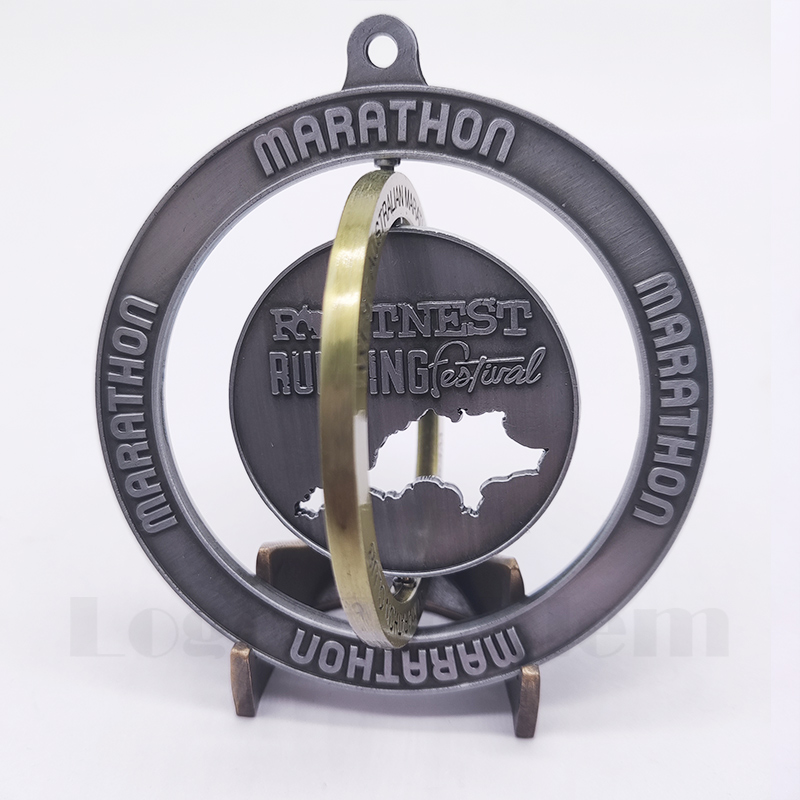
Standard participation awards often end up forgotten in a drawer within hours of an event. For event directors, school administrators, and youth league organizers, the challenge feels constant. You must find an award justifying the rising registration fees. You need something capturing attention immediately to keep participants excited to return next season. Adding mechanical movement to a standard metal medal changes the post-event experience entirely. It moves kids from passive observation to active, tactile engagement.
This guide breaks down the structural, financial, and logistical realities involved. Sourcing and designing custom spinner medals for kids requires careful planning. We help you evaluate if this engaging upgrade makes sense for your next tournament or race. You will discover exactly how these interactive pieces are engineered. We also cover strict safety standards, realistic budgeting frameworks, and essential timeline adjustments. By the end, you will know exactly how to order interactive awards you can trust.
Key Takeaways
Tactile Engagement: Moving parts increase the "shelf life" of an award by turning a static object into an interactive keepsake.
Durability Factors: Because moving parts introduce potential points of failure, evaluating rivet strength and bearing quality is critical when ordering for children.
Cost Dynamics: Expect higher mold and assembly costs compared to traditional sports medals; budgeting requires balancing higher unit costs against potential increases in event registration and brand visibility.
Lead Times: Mechanical designs require extended prototyping and assembly timelines—typically adding 1–2 weeks to standard manufacturing schedules.
Evaluating the ROI of Spinner Medals for Kids
Organizers often face a tough reality regarding participant satisfaction. Standard awards suffer from severe commoditization. You struggle to differentiate your spring tournaments or annual races from competing events. Participants receive identical flat awards weekend after weekend. They stop valuing them entirely. We must assess the real value of post-event engagement accurately. An interactive piece changes post-event behavior completely. It encourages kids to handle, show off, and share the award constantly.
They take the award to school on Monday morning. They proudly show their friends during recess. This indirectly acts as powerful marketing for your future events. Word of mouth spreads rapidly among parents. While a traditional design relies entirely on 2D art and basic enamel coloring, moving components change the game. A spinning soccer ball creates immediate tactile interest. A flipping gymnast captures the eye perfectly. Kids simply love to touch, spin, and play.
Interactive awards naturally translate to modern video content. Parents eagerly film their children playing. They post these proud moments online immediately. These Reels and TikToks increase organic event visibility dramatically. Your brand reaches new local audiences effortlessly.
Best Practices for Maximizing Engagement
Design the spinning element to strictly reflect the core sport.
Use bright, contrasting enamel colors to highlight fast movement.
Encourage parents to tag your event in their social media posts.
Core Mechanics: How Moving Parts Are Engineered
Center axis spinners represent the most common design format available today. An inner element rotates smoothly on a designated horizontal or vertical axis. Imagine a rotating globe housed securely inside a static outer ring. They look magical but require highly precise engineering. We must discuss the vital hardware thoroughly. High-quality vendors use secure internal pins. Cheap external rivets easily bend under pressure. They can snap completely during routine handling.
You need reliable bearings to make spinning possible and safe. A well-engineered spinner medal relies entirely on concealed, robust mechanisms. Material selection plays a massive role in long-term success. Standard zinc alloy works exceptionally well. However, you need specific structural adjustments. The outer frame must remain exceptionally thick. It houses the rotating pin safely without compromising overall structural integrity. Thin borders simply fail.
We must acknowledge some serious design limitations upfront. Moving parts naturally restrict your printable surface areas. You cannot place text on the empty space needed for smooth rotation. We strongly recommend placing essential text strategically. Keep your event branding strictly on the static outer borders. Keep the inner spinner highly visual and clear.
Common Mistakes in Mechanical Design
Creating an inner spinner too heavy for the central axis pin.
Leaving insufficient clearance, causing the metal pieces to rub and scratch.
Placing tiny text on the spinning element where it becomes totally illegible.
Safety and Durability Standards for Youth Awards
Kids will inevitably drop, throw, and yank their awards. You must face this harsh drop test reality. Moving parts inherently introduce weak points into any metal structure. You must actively plan for rough, unpredictable handling. Evaluate the strict risk of the spinner detaching completely. Small, painted metal pieces breaking off present a severe choking hazard. We emphasize the absolute necessity of reinforced axis pins. They ensure the inner element stays permanently attached.
Ensure your chosen vendor strictly uses non-toxic enamels. They must use lead-free paints exclusively. This compliance proves absolutely critical for youth sports medals. Kids often bite their awards for a classic finishing-line photo op. You cannot risk toxic exposure under any circumstances. Always ask manufacturers for current material safety certifications.
Moving parts require adequate clearance to spin freely. Ensure the design specifications leave no sharp internal edges anywhere. You must safely eliminate all pinch points within the negative space. Little fingers can get caught easily if tolerances remain too tight. Child safety always comes before complex aesthetics.
Cost vs. Impact: Budgeting for Custom Upgrades
Moving parts require multiple specialized molds. Manufacturers need one mold for the solid base. They require another separate mold for the spinning element. Manual assembly also adds significantly to the final labor bill. You must understand this inherent price premium upfront. We can break down the specific cost drivers clearly. Setup and mold fees essentially double. Unit costs naturally rise due to meticulous manual labor.
Shipping weight increases noticeably because the complex design uses far more metal. Detail exactly how minimum order quantities affect your final cost per unit. These custom upgrades generally offer much better returns at higher volumes. Higher quantities help amortize the fixed double-mold fees efficiently. Ordering fifty pieces strains your budget heavily. Ordering five hundred makes immense financial sense.
Create a logical framework for internal resource allocation. Decide if your event should upgrade awards across the board. Alternatively, you can reserve them for specific elite achievements. You might use standard pieces for general participation. You can save mechanical ones exclusively for division champions.
Cost and Value Comparison Chart
Award Type
Mold Requirement
Weight Profile
Engagement Level
Standard 2D Die-Cast
Single Mold
Light to Medium
Low (Passive)
Interactive Spinner
Dual Mold (Base + Inner)
Heavy
High (Active)
The Implementation Roadmap: From Design to Delivery
We strongly emphasize the absolute need for a 3D CAD proof. Simple 2D proofs cannot accurately demonstrate essential mechanical clearance. They fail to show rotation limits. They hide improper weight distribution issues completely. Insist on reviewing a detailed 3D render before approving full production. This step prevents costly manufacturing errors down the line.
A custom piece featuring multiple molded layers feels much heavier. It weighs significantly more than a standard die-cast item. You must actively factor in this extra weight. We advise selecting appropriate, highly reinforced lanyard widths. A standard thin ribbon might tear under the strain. A 1.5-inch sublimated ribbon perfectly supports the heavier metal and looks highly professional.
Adjust your logistical timelines accordingly. Standard manufacturing typically requires just three to four weeks. Mechanical designs demand much more production time. Budget five to seven weeks safely. This extended timeline accounts for essential mechanical alignment checks. It allows adequate time for meticulous manual assembly and rigorous quality testing.
Vendor Vetting Checklist
Ask them to share a clear video of a previous moving design.
Inquire about their historical defect rate on spinning components.
Request a physical sample of past work before starting full production.
Conclusion
Transitioning to custom spinner medals for kids serves as a highly strategic event investment. It directly boosts event branding effortlessly. It elevates overall participant satisfaction immensely. While they introduce noticeably higher upfront costs, the payoff remains undeniably substantial. You successfully deliver an award functioning as a memorable, highly interactive experience rather than just a shiny object.
By actively planning for longer lead times, you ensure vastly better quality control. Prioritize intensely strong internal mechanisms over flashy but fragile designs. Event organizers can successfully deploy interactive awards standing out brilliantly. You will easily conquer a highly crowded youth event landscape. Next steps include the following actions:
Request physical samples from three different specialized vendors.
Audit your current participant registration numbers to calculate accurate bulk pricing.
Draft a 3D design concept focusing purely on your core event theme.
Confirm all lead-free and safety compliance certifications before submitting your final order.
FAQ
Q: Are spinner medals heavier than standard custom sports medals?
A: Yes. Because they require an outer frame and a separate inner moving piece, they use more metal. They generally weigh 20-40% more than a standard flat medal of the exact same diameter. You will need thicker, reinforced ribbons to properly support them.
Q: What happens if the spinning mechanism breaks?
A: If poorly manufactured, the internal pin can bend. This locks the spinner safely in place, or snaps entirely, causing the piece to fall out. Always verify your vendor uses reinforced, closed-channel riveting. Proper engineering prevents these failures entirely during normal handling.
Q: Do spinner medals require a higher minimum order quantity (MOQ)?
A: Most custom manufacturers require an MOQ of 100 pieces for standard designs. Because of the complex dual-mold setup, some factories may require 150-200 pieces. This higher threshold makes producing the mechanical components cost-effective for both parties.
Q: Can any design be turned into a spinner?
A: No. The design must precisely accommodate a balanced center of gravity for the spinning element. It also needs sufficient border thickness to safely conceal the axis pins. Highly irregular shapes or extremely thin borders may not spin smoothly or securely.
Transform your brand IP into durable 3D figure trophies. Learn design for manufacturability, material selection, and scaling from prototype to volume production.