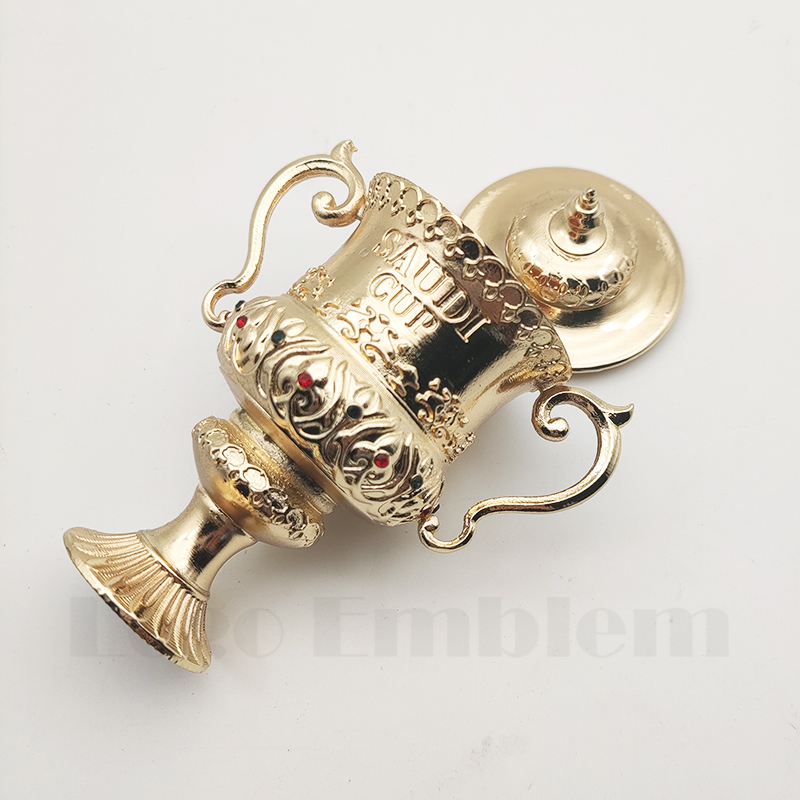
Generic awards completely fail to capture brand identity. They lose campaign momentum almost immediately. Custom physical assets bridge the critical gap between digital branding and tangible recognition. They transform fleeting corporate or athletic achievements into permanent, physical milestones. Transitioning a 2D mascot or sports logo into a physical, structurally sound object is complex. You must carefully balance brand fidelity against strict manufacturing realities. You cannot just extrude a flat 2D image. It will not stand upright. It will certainly not survive international shipping environments. This technical and procurement guide helps you effectively design, evaluate, and source custom figures. We will navigate the complex transition from rapid prototyping directly into final volume production. You will learn how to leverage resin, industrial plastics, and hybrid metal components. These strategies optimize both visual impact and your per-unit production budget.
Key Takeaways
Design for manufacturability: Successful 3D figures require modified proportions to ensure base stability and prevent extremity breakage.
Material dictates perception: Resin and filament offer cost-effective detailing for high-volume runs, while investment casting from 3D models yields premium weight and durability.
Scalability limits: Prototyping a single 3D figure trophy is simple; scaling to hundreds requires mold-making or print-farm capabilities to maintain tight QA.
Integration of mixed media: Modern awards often combine 3D printed figures with traditional components like a metal medal or engraved metal base to optimize both cost and perceived value.
The Business Case for Custom 3D Figure Trophies
Move beyond traditional, off-the-shelf plaques. They feel impersonal and highly generic. Custom figures act as permanent brand collateral. They sit proudly on recipients' desks for years. You want your award to spark daily conversations. Standard acrylic geometric shapes rarely achieve this goal. Tangible items drive emotional connections. We frequently see bespoke figures generate massive social media engagement. Recipients love sharing unique items online.
We map these custom awards to three distinct, high-impact use cases. First, corporate mascots serve as tangible IP extensions. You can use them for major corporate milestones. They also work brilliantly for quarterly employee recognition programs. They reinforce internal company culture daily. Second, sports teams leverage custom figures heavily. Teams sell them as high-engagement fan merchandise. Franchise managers also use them for tournament-specific player awards. VIP season ticket holders expect premium collectibles. Custom models fulfill this expectation perfectly. Third, brand campaigns rely on them for exclusivity. Marketing teams deploy them in limited-edition influencer seeding kits. They also serve as stunning event centerpieces during product launches.
You must evaluate your project against specific success criteria. A successful award must look identical to the original brand IP. Recipients quickly notice incorrect colors or warped proportions. Visual fidelity requires strict Pantone color matching. The item must also survive rough shipping environments. Delicate parts easily snap during global transit. Finally, the design must fit within strict per-unit budget constraints. You cannot sacrifice aesthetic quality. However, you must carefully control manufacturing and labor expenses.
Material Evaluation: 3D Resins vs. Metal Trophies
Choosing the right base material is a critical early decision. Your choice determines the final visual quality. It also impacts production costs directly. Different materials require completely different post-processing workflows.
We primarily assess two core 3D printing materials. SLA (Stereolithography) resin is best for ultra-fine mascot details. UV light cures the liquid resin layer by layer. It captures complex facial features effortlessly. It renders intricate clothing textures perfectly. However, standard resin remains susceptible to brittleness. You must formulate it with tough or ABS-like additives. This prevents the figures from shattering upon impact. FDM (Fused Deposition Modeling) plastics offer a different advantage. Printers extrude melted PETG or PLA plastic through a hot nozzle. They are highly cost-effective for large-scale production. They work exceptionally well for low-detail structural components. Unfortunately, FDM plastics require extensive post-processing. You must sand and prime them aggressively. This hides the visible layer lines.
You might also consider metal alternatives and hybrid production approaches. Direct metal casting remains highly prestigious. Manufacturers use high-resolution 3D printed wax models. They invest the wax in plaster and pour molten metal. This creates a solid metal trophy. This method offers superior weight. It provides unparalleled lifetime durability. However, it significantly increases your unit cost. It also extends your lead time by weeks.
Plating and finishing offer a highly creative middle ground. You can utilize electroplating over cured 3D resin. Technicians spray the resin with a conductive coating. They then submerge it in a copper or nickel bath. This mimics the look of traditional metal perfectly. It completely eliminates the heavy weight. It also avoids high foundry casting costs.
Many modern designs rely on complementary elements. You can pair a lightweight 3D figure with heavier traditional components. For example, attach a heavy die-cast metal medal directly to the figure's chest. Alternatively, embed a custom 3d medal into the display base. This anchors the piece securely. It provides a premium tactile feel when the recipient lifts it.
Material Option
Best Use Case
Durability Profile
Post-Processing Needs
SLA/DLP Resin
Complex facial features, high detail models
Moderate (requires tough resin blends)
Support removal, IPA wash, UV curing, hand painting
FDM Plastics (PLA/PETG)
Large structural bases, low detail geometric shapes
High (excellent impact resistance)
Heavy sanding, gap filling, thick primer application
Direct Metal Casting
Premium lifetime awards, corporate milestones
Very High (virtually indestructible)
Polishing, patina application, clear coating
Electroplated Resin
Faux-metal finish, weight-restricted shipping
Moderate (surface scratch risk)
Conductive spraying, electro-bath, polishing
Design Rules for Translating 2D IP into 3D Physical Assets
A beautiful 2D sketch does not guarantee a viable physical object. You must adapt the digital geometry for real-world physics. Game-ready digital assets often fail spectacularly on the printer bed. You must engineer them for manufacturability.
First, you must calculate the center of gravity. Base integration requires precise mathematical alignment. Dynamic poses look amazing on screen. A mascot jumping or running creates visual excitement. However, you must anchor these dynamic poses properly. Otherwise, the final piece will tip over constantly. We recommend adding hidden steel weights inside hollow resin bases. You also need to size the base carefully. It must comfortably accommodate varying text lengths. Personalized nameplates require adequate flat surface area.
Second, you need to modify proportions for durability. This is a non-negotiable step in producing a successful 3D figure trophy. Translating a flat drawing requires strategic thickening.
Thicken all thin elements like swords, tails, or fingers. We recommend a minimum wall thickness of 2.5mm for resin. They must survive aggressive sanding and transit.
Scale up small sports equipment artificially. A perfectly scaled golf club will snap off instantly. Make it slightly thicker to prevent breakage.
Eliminate extreme overhangs in your digital sculpt. This drastically reduces necessary support structures during printing. Fewer supports mean less physical scarring on the final figure.
Merge fragile intersecting geometries. Ensure arms connect deeply into the torso rather than just touching the surface.
Finally, enforce strict file preparation standards. Export your 3D models correctly. Manufacturers vastly prefer STEP files or high-resolution STL and OBJ formats. The digital meshes must be completely watertight. They must feature manifold geometry. Broken polygons or inverted normals will cause immediate print failures. We strongly recommend designing modularly. Add simple peg-and-hole joints. Print the main figure, the display base, and the custom nameplate separately. This modular approach makes sanding and hand-painting significantly easier. Painters can reach tight crevices without masking tape.
Implementation Risks: Scaling from Prototype to Production
Prototyping one perfect unit is relatively easy. Scaling that bespoke process to hundreds of units introduces major risks. You must anticipate these bottlenecks early.
Batch consistency issues ruin many ambitious projects. Print failures happen frequently during scaling. Resin curing shrinkage causes unpredictable dimensional inaccuracies. A display base printed on Monday might not fit a figure printed on Friday. Environmental factors like factory humidity and temperature affect curing times. You must calibrate printer batches perfectly. This ensures uniform assembly across the entire production run. Plan for a 10% material waste allowance.
Surface finishing creates the largest production bottleneck. 3D printing machines work fast. Hand-finishing remains incredibly slow. Sanding, priming, and hand-painting represent roughly 70% of the total labor cost. Every single custom award requires meticulous human intervention. Complex paint masking demands highly skilled labor. Airbrushing gradients takes time. Hand-brushing tiny mascot eyes requires extreme patience. You must factor these manual timelines into your production schedule accurately.
Packaging and logistics require equal engineering attention. A flawless award loses all value if it arrives broken. Standard bubble wrap is completely insufficient. Delicate resin extremities pierce through bubble wrap easily. You must design and manufacture custom protective packaging. We recommend using die-cut or CNC-routed EVA foam inserts. These inserts closely cradle the specific contours of your figures. They absorb shock during transit. Following ISTA drop-test standards is essential. You must drop-test your prototypes before shipping volume orders internationally.
Evaluating and Shortlisting a Manufacturing Partner
Choosing the wrong vendor jeopardizes your entire marketing campaign. You must evaluate manufacturing partners critically. Look far beyond their polished marketing materials.
Compare their portfolio against production reality. Look closely at their past physical work. Do you see highly visible print layer lines? Is the paint masking sloppy around the logos? High-quality digital renders mean nothing. Request detailed macro photos of actual, post-processed production units. You need to see the final sanded surface.
Assess their in-house capabilities thoroughly. Can their team handle CAD modifications directly? Do they manage 3D printing, painting, and metal casting under one roof? Outsourced steps increase your lead times. They also heavily dilute quality control standards. A unified facility ensures much better accountability. If a part fails, an in-house team reprints it immediately.
Compliance and IP security are vital considerations. Unreleased brand assets and campaign designs are highly confidential. Ensure the vendor enforces strict, secure data policies. You cannot risk your new mascot design leaking early on social media. They must sign non-disclosure agreements before receiving your 3D files. Ask them how they delete CAD files after production ends.
Define your next-step actions clearly. Always request a single paid physical prototype. Never commit to a large volume order based on a digital file alone. Use this physical prototype to define acceptable quality tolerances. Detail these exact tolerances in your service level agreement. Specify the exact Pantone colors they must match. Establish clear rules for acceptable defect rates.
Conclusion
Producing a custom 3D award requires highly specialized manufacturing knowledge. It is never just a simple file upload. You must bridge the gap between digital art and physical engineering.
Your core material choice dictates both the physical prestige and the unit price.
Optimizing your 2D design for real-world physics actively prevents broken elements.
Secure a manufacturing vendor who manages printing, finishing, and packaging tightly in-house.
Always demand a physical prototype to verify structural integrity and exact paint quality.
Are you ready to transform your brand IP into a tangible physical asset? Upload your 2D concept sketch or 3D file today. We provide a comprehensive manufacturability review and structural audit. Let us bring your custom awards to life.
FAQ
Q: How long does it take to produce a custom 3D figure trophy?
A: Timelines vary significantly based on complexity and finish. Prototyping typically takes 1 to 2 weeks. Volume production generally requires 3 to 6 weeks. Hand-painted details or complex electroplating will extend the production schedule. Always build extra buffer time into your project for custom foam packaging design.
Q: Can you make a 3D printed trophy feel as heavy as a metal trophy?
A: Yes. We use specific base-weighting techniques to increase heft. We frequently add dense metal slugs inside hollow resin bases. You can also utilize metal-fill filaments for FDM printing. Alternatively, electroplating over resin mimics the premium cold touch of actual metal casting at a much lower cost.
Q: What is the best file format to send for a quote?
A: Manufacturers strongly prefer STEP or high-resolution STL files. OBJ files are also perfectly acceptable if they include color texture data. The files must be completely watertight and manifold. If you only have 2D vector files, you will require professional CAD modeling services before we can quote.
Q: Are custom 3D medals more expensive than traditional stamped medals?
A: Cost depends largely on production volume and topology. 3D printing is cheaper for very low volumes because it requires zero tooling fees. It also easily handles extreme dimensional complexity. However, traditional stamping wins significantly at scale. Once you pay for the steel mold, stamped medals cost pennies per unit.