For corporate buyers and brand managers, sourcing custom lapel wear goes far beyond merely ordering generic merchandise. It is fundamentally about accurately translating core brand equity into a tangible, wearable medium. Every material and finish you choose directly reflects the prestige of your organization.
When elevating a corporate logo for executive recognition, VIP gifting, or high-end staff uniforms, the standard promotional item often falls short. Procurement teams must choose between the traditional, jewelry-like finish of die struck pins and the vibrant, color-accurate appeal of painted enamel alternatives. Making an uninformed choice can dilute brand identity and waste valuable marketing budgets.
This comprehensive guide strips away the industry marketing fluff to objectively compare manufacturing processes, physical design limitations, and practical use-case alignments. We provide the technical clarity you need to finalize your procurement decision. You will learn how to balance strict brand compliance with outstanding perceived value.
Key Takeaways
Die struck lapel pins rely entirely on elevated and recessed metal to showcase a logo, offering a classic, high-end "jewelry" aesthetic ideal for tenure awards and executive branding.
Hard enamel pins are the premium choice when strict Pantone (PMS) color matching is mandatory, providing a smooth, flush surface that rivals die struck pins in durability.
Soft enamel pins offer high color contrast with a textured feel, serving as a cost-effective solution for large-scale corporate events rather than premium executive wear.
Your final choice depends heavily on your logo’s design architecture (gradients, line weight, and color dependency) and the intended business outcome (recognition vs. mass marketing).
Manufacturing Realities: How Metal and Enamel Dictate the Final Finish
Understanding production methods establishes realistic expectations for your final product. Different manufacturing techniques fundamentally alter how light interacts with your logo. They also determine the physical weight and durability of the finished piece. We must examine the core differences between shaping metal and applying color.
The Die Struck Process (All-Metal)
Manufacturers create all-metal pins using an industrial stamping process. Technicians strike custom designs into base metals like brass, copper, or iron. They use a hardened steel die under immense pressure. This sheer force ensures excellent precision and captures fine line work accurately. Copper and brass yield the sharpest details due to their relative softness before plating.
This process relies heavily on high visual contrast instead of added paint. Raised areas receive a highly polished, mirror-like finish. Recessed background areas undergo sandblasting or texturing. This matte background creates crucial visual depth. The final output is a monochromatic, weighty metal badge. It carries a classic aesthetic highly favored by legacy institutions and luxury brands.
The Enamel Process (Color-Filled)
Color-filled styles actually begin their lifecycle exactly like their all-metal counterparts. They start as stamped metal bases. The crucial difference lies in the next steps. Technicians fill the recessed background cavities using colored liquid enamel. This paint brings Pantone-matched branding to life.
The curing and finishing methods dictate the final texture. You must understand the distinct differences:
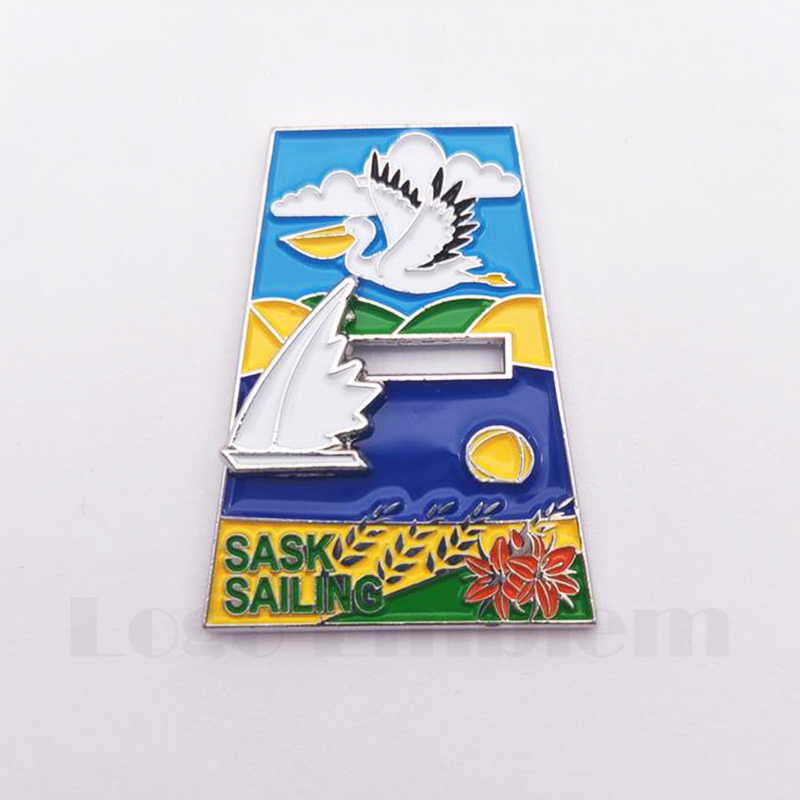
The air-dried method: Technicians apply liquid paint and cure it briefly. The paint settles below the raised metal borders. This creates a tactile, dimensional texture. Every soft enamel pin features these distinct metal ridges. You can easily feel the logo outline when running a thumb across the surface.
The high-heat baked method: Technicians overfill the metal cavities using a specialized resin. They bake the piece at extremely high temperatures to harden the paint. Afterward, they grind and polish the entire surface down. This aggressive polishing leaves the metal lines and colored areas perfectly flush. A premium hard enamel pin feels completely smooth, mimicking stained glass or fine jewelry.
The Decision Matrix: Evaluating Brand Compliance and Aesthetics
Brand managers face a delicate balancing act at the bottom of the procurement funnel. You must weigh strict corporate identity guidelines against your desired aesthetic. A beautiful product fails if it violates core brand standards. We use specific evaluation criteria to navigate this decision.
If your brand recognition relies entirely on specific Pantone colors, painted options remain non-negotiable. Technology companies and modern startups often require exact color matching to maintain consistency across physical and digital mediums. Conversely, if your logo boasts a strong, recognizable silhouette, it easily stands alone without color. For these strong architectures, an all-metal finish offers a much more understated, executive appearance. It avoids looking like a consumer-grade toy.
You must also evaluate the perception of premium value. Smooth, glass-like polishing communicates modern sophistication. It looks clean, sleek, and highly corporate. On the other hand, the sculptural weight of die struck lapel pins communicates heritage, stability, and legacy. Both styles feel expensive, but they broadcast completely different corporate messages.
Plating choices further impact this messaging. Manufacturers submerge the stamped base into electroplating tanks. You can choose gold, silver, bronze, or black nickel finishes. Antique finishes pair exceptionally well with all-metal designs. A dark chemical wash settles into the recessed texturing. Technicians then wipe the raised surfaces clean. This antique technique aggressively enhances 3D detailing, making complex typography highly legible without needing a single drop of colored paint.
The comparison chart below highlights the primary aesthetic and functional differences between the three main manufacturing styles.
Manufacturing Style
Surface Texture
Color Capability
Perceived Corporate Tone
Die Struck (All-Metal)
Tactile (Raised & Recessed)
None (Monochromatic)
Heritage, Legacy, Executive
Soft Enamel
Textured (Ridged metal lines)
Full Pantone Matching
Casual, Promotional, Event-Driven
Hard Enamel
Smooth and Flush
Full Pantone Matching
Modern, Sophisticated, Retail-Ready
Design Architecture Constraints and Translation Risks
What works perfectly on a digital screen rarely translates flawlessly into poured metal. Physical manufacturing imposes strict architectural limitations. Corporate design teams must adapt their vector files for industrial production. Ignoring these constraints leads to messy, illegible merchandise.
Liquid paint requires closed metal borders for containment. The industry calls these borders "wirelines." If your vector logo features floating elements or incredibly thin lines, liquid paint will spill across boundaries. Enamel pins demand a minimum metal line thickness of 0.2 millimeters. Color cavities must measure at least 0.3 millimeters wide to hold liquid paint. Logos lacking these closed loops require immediate design modifications. Designers typically add a unified background color or connect floating letters to a metal base frame.
You must also understand the difference between 2D and 3D sculpting. Painted styles utilize a strictly 2D process. They feature flat colors sitting inside flat metal walls. You cannot achieve rounded surfaces or domed textures alongside liquid paint. However, manufacturers can upgrade die struck lapel pins to true 3D. True 3D molds allow for rounded edges, sloping curves, and intricately sculpted details. This makes the all-metal method vastly superior for replicating complex crests, human faces, architectural buildings, or animal mascots.
Set realistic expectations regarding gradients and shading. Neither traditional painting nor metal stamping supports printed color gradients. You cannot fade from light blue to dark blue organically. You must separate varying shades with solid metal lines. If your corporate branding mandates flawless gradient replication, you must pivot to offset printed options. UV-printed items capture exact gradients beneath an epoxy dome. Be aware, however, that printed items carry a significantly lower perceived value than stamped metal.
Aligning Pin Style with Business Outcomes and Use Cases
Matching the physical product to your specific corporate initiative guarantees a higher return on your investment. Choosing an overly expensive finish for a mass giveaway wastes money. Selecting a cheap promotional item for a tenure award insults the recipient. You must align your material choice with your intended business outcome.
Employee Recognition & Years of Service: Honoring decades of loyalty requires an heirloom-quality product. All-metal styles serve as the undisputed industry standard for tenure awards. They signal permanent value. Many corporations elevate these pieces further by applying precious metal plating, such as 24k gold or pure silver. Adding synthetic jewels or genuine diamonds to signify specific milestone years creates a highly coveted executive reward.
High-End Retail & VIP Merch: Modern brands selling merchandise directly to consumers need retail-quality finishes. The flush, highly polished surface of baked enamel justifies higher retail price points. It appeals directly to modern design sensibilities. Fashion brands, museums, and boutique agencies rely on this smooth aesthetic to maintain a premium brand image while utilizing vibrant colors.
Conferences, Trade Shows, & Uniforms: Large-scale events prioritize budget scalability over heirloom legacy. When outfitting a staff of five thousand or creating trade show giveaways, you need a durable, high-volume option. Air-dried painted styles provide excellent color contrast at a much lower unit price. They withstand daily wear on employee lanyards or aprons. They serve the mass-marketing function perfectly without overextending procurement budgets.
Cost Scaling, Mold Fees, and Production Logistics
Procurement teams need transparent insight into cost drivers to formulate accurate shortlists. You must evaluate upfront tooling charges alongside scaling unit costs. Understanding labor intensity helps you negotiate better bulk rates and manage your delivery expectations effectively.
Every custom shape requires an upfront tooling cost. Manufacturers must cut a unique steel mold for your logo. Standard 2D molds generally cost less because they require minimal machining time. Conversely, true 3D molds cost significantly more. Technicians must use advanced CNC machining to carve rounded depths and variable heights into the steel block. You pay this tooling fee once, but it impacts your initial project budget.
Unit costs scale very differently depending on the chosen finish. Labor intensity drives the per-unit price. Baked and polished enamel is incredibly labor-intensive. Technicians perform multiple rounds of baking, hand-grinding, and buffing. This makes it the most expensive style per unit. In contrast, an all-metal finish proves highly cost-effective at high volumes. Once the machine stamps the metal, the factory skips the entire painting and baking phases. Less manual labor equals a lower unit price at scale.
Lead times require careful logistical planning. Standard custom merchandise generally takes two to four weeks from artwork approval to final delivery. The manufacturing phases dictate this timeline. Complex 3D molds take days just to cut. High-color designs require lengthy curing periods. You should always allocate the full four-week window for complex projects to avoid expensive rush shipping fees.
Conclusion
Choosing the right corporate lapel wear requires balancing brand compliance against manufacturing realities. If your priority is exact Pantone color matching combined with a modern, glossy finish, you should shortlist hard enamel. Conversely, if you design for executive recognition, legacy milestones, or desire an understated, jewelry-like finish, all-metal stamping remains the superior choice.
Take immediate action by submitting your vector logo for a professional factory proof. A manufacturer’s design team can instantly evaluate your artwork architecture. They will identify lines too thin for liquid paint. They can also recommend whether an antique finish will enhance the legibility of your specific typography. Secure a physical sample or digital mockup to ensure the final product perfectly honors your brand identity.
FAQ
Q: Can I get Pantone color matching on a die struck pin?
A: No. By definition, this specific stamping method means no color is added. The design relies entirely on the contrast between polished raised metal and textured recessed metal. If your brand guidelines mandate specific colors, you are transitioning to an enamel pin.
Q: Is hard enamel more durable than soft enamel?
A: Yes. The extreme baking and aggressive polishing process makes the surface highly resistant to scratching. It acts like a protective shield. Conversely, the air-dried recessed paint in other styles can collect dust or chip under extreme daily wear.
Q: Will my logo look different if converted to a 3D die struck pin?
A: Yes. A flat 2D vector logo needs reinterpretation into varying physical heights, slopes, and depths. It requires a skilled factory designer to translate flat corporate art into a physical 3D mold successfully.
Transform your brand IP into durable 3D figure trophies. Learn design for manufacturability, material selection, and scaling from prototype to volume production.
Want to make custom keychains? Soft PVC keychains are durable and versatile. They're perfect for gifts or promotions.This guide will teach you how to make soft PVC keychains step by step. From design to completion, you'll learn the whole process.At Logo Emblem, we provide high-quality, customizable soft PVC keychains. Learn more about our products today.