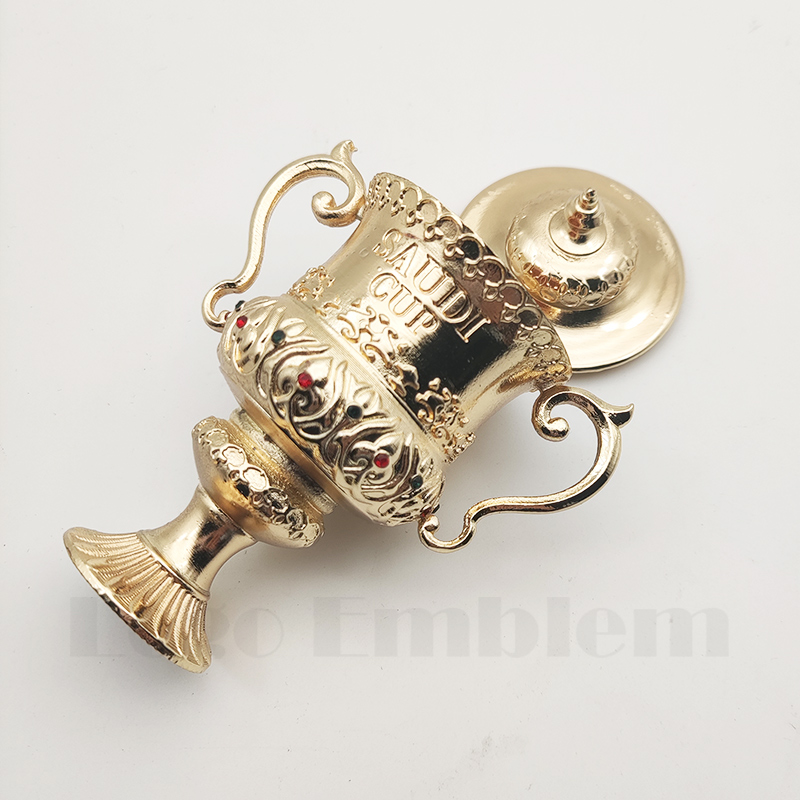
Every event organizer eventually faces the same high-stakes decision when planning an awards ceremony. You want to hand out breathtaking recognition pieces to your winners. However, you must also keep budgets and logistics firmly in check. Balancing prestige against unit costs and shipping realities creates a genuine buyer’s dilemma. Traditional awards often drain budgets through hidden freight fees and massive storage demands. Fortunately, modern manufacturing techniques have shifted the landscape. Advanced production has blurred the lines between bulky statues and wearable awards. Today, high-end customized pieces serve as a highly viable alternative to conventional cups and figures. This article provides a transparent, criteria-based evaluation framework. We will help your procurement and event teams finalize the best award format. You will learn exactly how to match your award choice to your specific event type, scale, and budget.
Key Takeaways
Format Utility: Traditional trophies dominate "single-winner" perpetual recognition, while trophy medals offer scalable, individualized prestige for large participant pools.
Logistical Impact: Medals drastically reduce shipping costs, storage requirements, and breakage risks compared to traditional tiered trophies.
Design Evolution: Modern custom trophy medals utilize die-cast zinc and 3D molding to replicate the weight and premium feel of a standard metal trophy at a lower per-unit cost.
Lead Time Realities: Custom metal molds require strict production timelines; traditional off-the-shelf trophies offer faster turnaround but limited brand integration.
The Core Distinction: Form, Function, and Perceived Value
To make an informed choice, we must first define the modern trophy medals. This format brilliantly bridges the gap between two distinct recognition styles. It combines the substantial weight and intricate detailing of a traditional award with a wearable, compact nature. You no longer have to choose between prestige and portability. These specialized awards offer the sculptural depth of a heavy statue. Yet, they remain easy to drape around a winner's neck.
Consider the psychology of your recipient. Traditional cup or figure designs offer excellent "shelf display" value. They look fantastic sitting in a glass cabinet or on a corporate desk. However, wearable awards excel in immediate ceremonial impact. They provide unmatched "ceremonial draping" moments on stage. This format is incredibly photo-ready. Winners love taking immediate selfies wearing their awards. They share these images across social media, instantly boosting your event's visibility.
We must also analyze volume versus exclusivity. Traditional formats naturally fit "top three" podium structures. Handing out massive cups to hundreds of people makes little sense. It dilutes the exclusivity of the award. Wearable formats solve this scaling issue perfectly. They serve tier-one winners while seamlessly accommodating mass-finisher recognition. You can honor thousands of marathon runners without diluting your brand impact. The format scales effortlessly while maintaining a high perceived value.
Material and Design Capabilities in Modern Awards
The era of cheap, hollow plastic is officially over. Both categories have seen a massive shift toward premium materials. Event participants now expect high-quality craftsmanship. Heavy-weight alloys have elevated the standard for what constitutes a credible award. A lightweight plastic figure no longer cuts it for serious competitions.
Let us integrate the specifications of a traditional metal trophy and its wearable counterpart. Weight acts as a direct proxy for value in the human mind. When we hold something heavy, we instinctively perceive it as expensive. If you compare the ounce-to-dollar ratio, a solid metal medal often wins. It feels significantly more premium than a wood-and-plastic column of the exact same price. You get dense, concentrated quality rather than airy bulk.
Modern surface finishes further enhance this perceived value. You can specify a variety of premium treatments for your custom pieces:
Antique Plating: Gives pieces a timeless, weathered look that accentuates fine details and text.
Dual-Tone Finishes: Combines gold and silver plating for a striking, high-contrast aesthetic.
Hard Enamels: Fills recessed areas with vibrant, scratch-resistant colors to match your brand exactly.
Furthermore, we are witnessing the rise of the 3d trophy element in wearable formats. Flat designs are no longer the only option. Advanced CNC machining and custom die-casting allow manufacturers to craft high-relief layers. These multi-layered designs mimic the sculptural depth of a traditional figure. You get robust curves, intricate textures, and stunning realism packed into a compact disc.
Logistical Realities: Hidden Costs of Award Procurement
Award procurement involves much more than the initial invoice price. Hidden expenses can quickly consume your event budget. Shipping and freight multipliers play a massive role here. Logistics companies charge based on dimensional weight. This means they bill you for the space a box takes up, not just its physical heft. Traditional awards incur high volumetric shipping costs. They also require extensive protective packaging, bubble wrap, and oversized cartons.
Event-day handling presents another logistical challenge. Consider the storage footprint at your venue. Wearable awards are highly compact. You can organize them neatly in small boxes behind a registration desk. They arrive pre-sorted by category and age group. Conversely, large statues require significant staging area space. You need massive tables just to unbox and organize them before the ceremony.
Finally, you must address breakage and replacement rates. The vulnerability of traditional columns and figurines during transit is well documented. Fragile acrylic peaks and plastic figures snap easily during rough handling. When a winner drops a plastic column, it shatters. In stark contrast, solid die-cast zinc awards are nearly indestructible. They survive cross-country shipping and accidental drops without a scratch.
Logistical Factor
Traditional Formats
Wearable Custom Formats
Shipping Costs
High (Billed on Dimensional Weight)
Low (Dense, Heavy, but Compact)
Venue Storage
Requires extensive staging tables
Fits neatly in standard small boxes
Breakage Risk
High (Fragile columns and figures)
Virtually Zero (Solid metal alloy)
The Event Decision Matrix: Matching Format to Use Case
Selecting the perfect recognition piece depends entirely on your event context. A mismatch between format and audience can undermine the entire ceremony. Here is a definitive guide to matching the format to your specific use case.
Corporate & Industry Summits: Professionals value understated, modern aesthetics over oversized traditional cups. They want something elegant for their office.
Recommendation: High-end, custom-boxed wearable pieces or heavy acrylic desktop pieces.
Why: A compact, heavy alloy piece presented in a velvet box feels prestigious. It aligns with corporate sophistication and avoids looking like a children's sports prize.
Endurance Sports & Tournaments: Marathons, triathlons, and large martial arts tournaments have unique demands. You need to reward everyone who finishes while honoring the champions.
Recommendation: Custom wearable pieces.
Why: They offer unmatched scalability for hundreds of participants. Volunteers can easily distribute them right at the finish line. They also generate high ROI for social media sharing when participants wear them proudly.
Academic & Legacy Institutions: Universities, debate leagues, and historical societies thrive on tradition. They value historical continuity over modern convenience.
Recommendation: Traditional wood or metal structures and perpetual plaques.
Why: These formats align perfectly with conservative traditions. They accommodate the need for perpetual engraving, allowing you to add new winner names year over year.
Implementation Risks: Sourcing, Tooling, and Timelines
Procurement teams must navigate specific implementation risks before signing a purchase order. Timeline miscalculations are the most common pitfall in award planning.
The custom mold bottleneck is a critical factor. True custom shapes require intricate mold-making processes. Manufacturers use die striking or zinc casting to create your design from scratch. This process strictly dictates a 3-to-5-week lead time. You cannot rush the cooling of steel molds or the precision of CNC machining. If your event is only two weeks away, full customization is simply impossible.
When timelines are too tight for custom metal molding, you need "off-the-shelf" fallbacks. Planners often compromise by using stock traditional pieces. You can purchase generic cups and add custom laser-engraved plates locally. This ensures you have something to hand out on stage. However, it severely limits brand integration. You lose the ability to shape the award into your company logo or event mascot.
Budget allocation advice is vital here. Buyers must understand the difference between tooling fees and per-unit costs. Tooling fees cover the initial setup costs for custom 3D molds. They represent a one-time expense. Minimum order quantities (MOQs) directly affect your final decision. If you only need five awards, the high tooling fee makes custom molds cost-prohibitive. If you need five hundred pieces, the tooling fee amortizes beautifully, making custom casting highly economical.
Conclusion
The choice between these distinct award formats ultimately shapes your event's final impression. Your final decision comes down to shipping logistics, event scale, and the desired recipient experience. Traditional statues remain excellent for perpetual academic recognition and low-volume podium moments. They offer classic shelf appeal for conservative institutions. Conversely, wearable pieces provide unmatched scalable prestige. They eliminate hidden freight bloat and offer a highly photographable, wearable experience for modern events.
Your next steps are clear and actionable. First, encourage your organizers to audit their historical freight costs for large cups and figures. You will likely uncover significant wasted spending on dimensional shipping. Second, request a physical sample of a die-cast 3D piece from your supplier. Compare its weight, finish, and density against your current awards before committing your budget.
FAQ
Q: Do custom trophy medals feel as "premium" as a traditional metal trophy?
A: Yes, if specified correctly. Specifying die-cast zinc or brass at a minimum thickness of 3mm-5mm provides a substantial, heavy feel. This concentrated density often feels much more premium than large, hollow plastic figures. They offer a substantial weight comparable to a high-end stationary award.
Q: Are 3D trophy medals more expensive to produce than standard flat medals?
A: The main difference lies in the initial mold fee. 3D tooling requires advanced CNC machining, making the setup cost higher than 2D molds. However, the actual per-unit material cost remains relatively stable. When ordered at volume, the price difference per piece becomes negligible.
Q: Can we use a hybrid approach for our event?
A: Absolutely. Many organizers use a common tiered strategy to balance prestige and budget. You can award large traditional cups for the overall champions. You then distribute custom wearable pieces for category winners and general participants. This ensures cohesive branding across both formats while managing costs effectively.
Transform your brand IP into durable 3D figure trophies. Learn design for manufacturability, material selection, and scaling from prototype to volume production.