Transitioning a complex, digitally designed logo onto a physical award often forces a strict compromise. Event organizers frequently struggle to balance digital design fidelity against traditional manufacturing limits. Vibrant artwork looks perfect on a computer screen. However, translating these intricate graphics into a tangible object introduces rigorous physical constraints.
Buyers face a core dilemma during procurement. They must decide between the classic, textured prestige of traditional finishes and the precise, gradient-friendly capabilities of modern printing techniques. Selecting the wrong production method can ruin brand accuracy or derail critical event timelines.
This guide evaluates both methods through a strict manufacturing lens. We carefully analyze production costs, lead times, brand accuracy, and material durability. By understanding these technical realities, event directors and corporate buyers can confidently make a technically sound, budget-aligned decision.
Key Takeaways
Design Limitations: Enamel requires physical metal borders and a minimum of 1mm color-fill space; UV printing handles unlimited details, gradients, and photo-realistic shadows.
Tactile vs. Visual: Custom enamel medals offer a traditional, high-end "raised and recessed" feel. UV printed medals provide a smooth, modern finish focused on visual exactness.
Speed and Scale: A UV printing medal bypasses the manual color-filling and baking processes, offering significantly faster lead times (often 2 weeks vs. 4+ weeks for enamel).
Cost Hack for Series Events: You can cast a single blank metal medal mold for an entire series and use UV printing to apply different dates or locations, saving thousands in repetitive mold fees.
The Physical Realities of Manufacturing Custom Medals
Graphic designers typically create vector artwork in digital workspaces. Digital software renders colors flawlessly and scales elements infinitely. Physical manufacturing plays by entirely different rules. Translating a digital file into a solid metal medal requires adapting the design for a die-cast or stamped substrate. Factory machines press or pour hot metal into physical molds. This physical reality means ultra-fine lines or tiny text often disappear or blur during the stamping process.
Traditional manufacturing relies heavily on the "metal border" rule. A base metal must serve as a structural wireframe for the design. You must use raised metal lines to create enclosed physical boundaries. These distinct cavities hold liquid colors securely in place. Without these raised borders, liquid pigments simply bleed into one another during production. This requirement forces designers to simplify complex logos into distinct, color-blocked sections.
Over the past decade, personalization demands evolved rapidly. Corporate sponsors began enforcing strict brand guidelines. Companies demanded exact Pantone color matches, subtle gradients, and complex drop shadows. Traditional filling methods cannot recreate these digital effects. Manufacturers needed a modern solution. This shift in corporate expectations directly necessitated the rise of modern digital printing applications on metal surfaces.
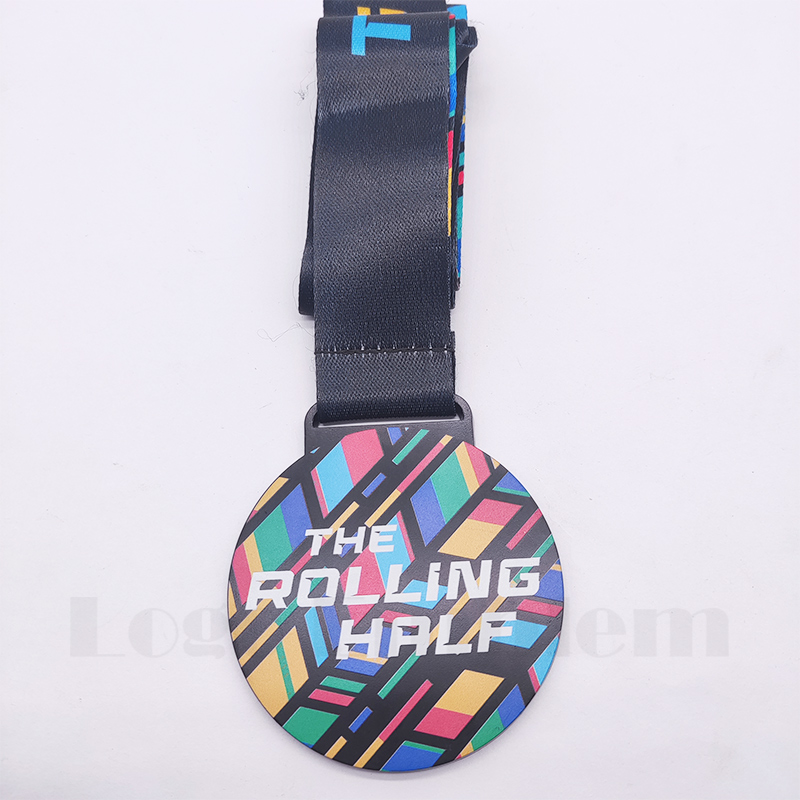
Custom Enamel Medals: High Perceived Value and Classic Texture
Traditional color-filled awards represent the industry standard for high-end events. Manufacturers create a strong base using zinc alloy or iron. Factory workers stamp or die-cast this base to form distinct raised and recessed areas. Technicians then inject liquid pigment directly into the recessed cavities using specialized needle dispensers. Finally, the factory bakes the pieces in high-temperature kilns to harden the liquid into a durable, glass-like finish.
The Physical Constraints
This traditional method demands strict adherence to physical limits. Planners must understand these constraints before finalizing any artwork.
Strict spatial minimums: The factory injection needle requires space to operate. Designers must leave at least 1mm of enclosed space for every colored section. Areas smaller than 1mm cannot receive color accurately.
Solid colors only: Liquid pigments cannot blend seamlessly on a metal surface. You cannot reproduce gradients, color fades, or photographic elements. Each cavity holds one solid color.
Line thickness rules: The raised separating walls must measure at least 0.2mm thick to prevent structural collapse during the pressing phase.
Best Use Cases and Durability Realities
These traditional pieces excel in specific environments. Marathons, high-end corporate recognition programs, and IP merchandise lines heavily favor custom enamel medals. These audiences expect a heavy, tactile, "jewelry-like" finish. The classic raised-and-recessed texture looks exceptional in post-event social media marketing. Participants associate this specific weight and feel directly with high perceived value.
The baked surface proves highly durable over time. The hardened material resists fading from sunlight exposure. It withstands standard wear beautifully. However, you must consider extreme impact risks. Dropping the piece onto concrete can occasionally cause the hardened color sections to chip or crack. Despite this minor risk, the overall longevity remains exceptional.
UV Printed Medals: Unmatched Precision for Complex Art
Modern printing technology removes nearly all traditional physical constraints. Specialized flatbed printers apply full-color ink directly onto a flat or pre-cast metallic surface. As the printhead moves across the substrate, an attached ultraviolet light instantly cures the ink. This immediate drying process locks the colors in place before they can run or bleed.
The Technical Advantages
Digital printing provides massive technical benefits for complex graphic requirements.
Unlimited Design Freedom: The printhead precisely deposits microscopic ink droplets. It flawlessly replicates photo-quality images. It easily handles complex color transitions and intricate corporate gradients. You can even print microscopic text legibly, which traditional methods completely fail to support.
Production Efficiency: A UV printed medal completely bypasses the labor-intensive manual color-filling phase. Factory workers skip the lengthy kiln baking process. This technological shortcut significantly compresses production timelines.
Multi-layered Texture: Advanced printers can perform multiple passes. They stack clear ink layers to build a subtle, modern 3D texture directly over the flat image.
Best Use Cases and Durability Realities
Digital printing dominates commercial and promotional sectors. Corporate PR events, tech competitions, and large-scale charity runs frequently use this method. In these scenarios, reproducing exact brand logos or precise sponsor artwork remains non-negotiable. Sponsors will reject pieces displaying altered or simplified logos. Printing ensures absolute brand compliance.
Durability requires a different approach here. The ultraviolet curing process bonds ink tightly to the base material. However, the dried ink essentially sits on the very top surface. It lacks the physical protection of raised metal borders. Quality Standard Check: Buyers must explicitly request an epoxy dome or a clear protective topcoat. This transparent resin layer seals the printed image, preventing scratching and edge-wear during long-term storage.
Head-to-Head Evaluation: Budget, Timeline, and Scalability
Selecting the right process involves more than just aesthetics. You must align your choice alongside budget parameters and hard deadlines. Every manufacturing decision directly impacts unit pricing and factory turnaround times.
Cost-to-Complexity Ratio
Traditional manufacturing pricing scales linearly according to color count. Factory workers manually inject every single color. A five-color design costs significantly more than a two-color design due to increased human labor. Conversely, a UV printing medal maintains a flat application cost. The printhead applies all colors simultaneously. Whether your design features three solid colors or a million-color photograph, the printing cost remains identical. This makes digital printing highly cost-effective for multi-color corporate branding.
Production Speed
Manufacturing timelines differ drastically between the two methods. Traditional molding, manual injection, and kiln baking usually require 4 to 6 weeks. Factory queue times also increase during peak sporting seasons. Digital printing offers exceptional speed. Because it removes manual injection and baking, factories often turn around printed orders in 2 weeks or less.
The "Series Event" Scalability Hack
Race directors hosting multi-city series events often overspend on tooling fees. Every unique design traditionally requires a separate die-cast zinc-alloy mold. Mold fees add up quickly. Savvy planners utilize a powerful scalability hack. You can pay for just one custom mold featuring the core series branding. The factory casts thousands of these blank bases. Before each specific race, the factory prints the unique city name, current date, or local sponsor logos onto the blank surface. This strategy entirely eliminates redundant mold fees across an annual event series.
Manufacturing Comparison Chart
Evaluation Criteria | Traditional Enamel | UV Printing |
Color Limitations | Solid colors only. Requires metal borders. | Unlimited colors. Supports gradients and photos. |
Cost Structure | Cost increases per additional color. | Flat fee regardless of color complexity. |
Production Time | 4 to 6 weeks (manual labor intensive). | 1 to 2 weeks (automated machine process). |
Tactile Finish | Heavy, classic recessed-and-raised feel. | Smooth surface (unless clear-coated). |
Mold Fee Efficiency | Requires new mold for every text/date change. | High. Can reuse one base mold for multiple events. |
Shortlisting Logic: Which Medal Fits Your Event Strategy?
Decision-making becomes straightforward once you evaluate your core event priorities. Use the following framework to shortlist the perfect manufacturing technique for your upcoming project.
Choose Custom Enamel Medals If:
The core design appears bold, relies strictly on solid colors, and factory workers can easily separate elements using physical metal lines.
You possess an extended, flexible lead time of 4 to 6 weeks before the event date.
The target audience highly values traditional weight, deep texture, and a classic "finish line" feel.
You do not need to print microscopic sponsor disclaimers or complex photographic backgrounds.
Choose a UV Printed Medal If:
The submitted artwork includes mandatory corporate sponsor logos, intricate small fonts, complex gradients, or actual photographs.
You must meet a tight event deadline and need rapid turnaround times.
You plan to apply artwork onto non-traditional flat materials like acrylic, slate, or wood.
You aim to control project costs by reusing a standardized base mold across multiple event locations.
Conclusion
Neither manufacturing method reigns universally superior. The correct choice depends entirely on artwork complexity, event deadlines, and your overall project budget strategy. Traditional methods deliver undeniable prestige and lasting texture. Meanwhile, digital printing solves modern branding challenges through absolute visual accuracy and rapid production speeds.
Before authorizing a final mass production run, we recommend taking a few critical next steps. Always request a 1:1 scale physical paper printout of your artwork from your manufacturer. This simple test immediately reveals readability issues or impossibly small details. Furthermore, ask your vendor to provide side-by-side material samples. Holding a traditional piece next to a printed piece covered in an epoxy dome guarantees you choose the right tactile experience for your specific audience.
FAQ
Q: Can I combine custom enamel and UV printing on the same medal?
A: Yes. A common premium approach is using enamel for the primary bold design elements and applying a UV printed insert or overlay for small, complex sponsor logos that require exact brand matching.
Q: Will a UV printing medal scratch or fade over time?
A: UV ink is highly durable and water-resistant, but because it sits on top of the metal, it is susceptible to sharp abrasions. Always verify that your manufacturer applies a clear protective topcoat or epoxy resin.
Q: Are UV printed medals cheaper than soft enamel?
A: It depends on the design. For simple 1-to-3 color designs, enamel is highly competitive. For designs featuring 5+ colors, gradients, or requiring fast delivery, UV printing becomes the more cost-effective option by reducing manual labor.


