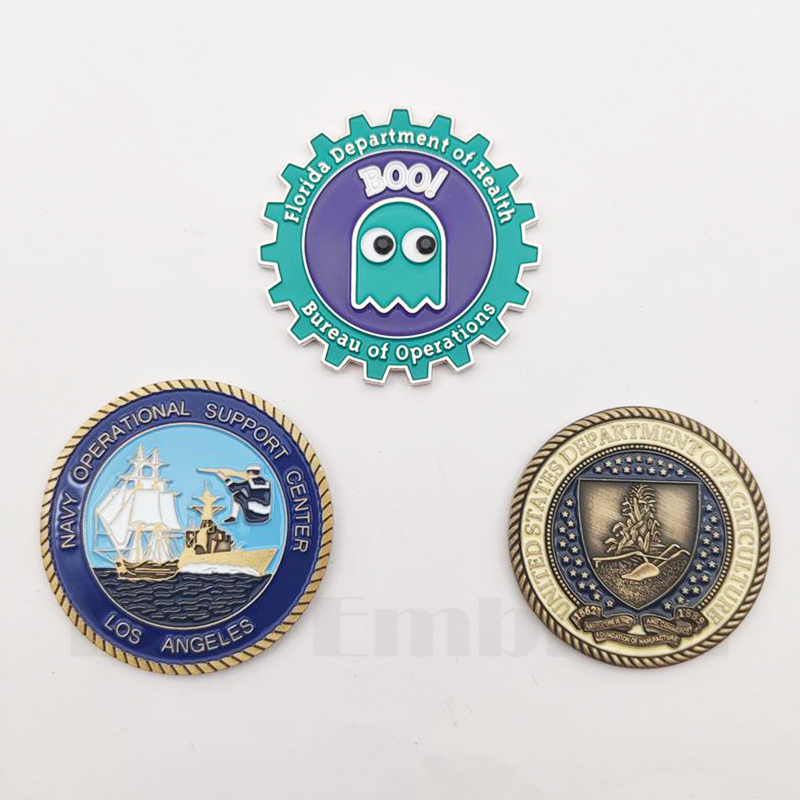
The edge of a coin frequently gets treated as an afterthought during the initial drafting phase. Yet, it fundamentally dictates the tactile feel, perceived weight, and visual framing of the final product. It acts as the final touch that brings complexity to a project without distracting from the central artwork. Selecting an incompatible edge can clash with your core graphics, unnecessarily inflate production timelines, or compromise the structural integrity of complex shapes during manufacturing. Navigating the technical specifications of challenge coin edge options—from standard reeded cuts to intricate diamond and custom profiles—requires aligning your design intent with metallurgical and tooling realities. We will break down how to match edge profiles with base materials, plating finishes, and overall dimensions to ensure a cohesive presentation.
Key Takeaways
Material and Tooling Constraints: Edge selection must align with the base material (e.g., a zinc alloy challenge coin vs. stamped brass) and the coin's overall thickness to ensure structural viability.
Reflective vs. Tactile Value: Diamond-cut edges (cross cut, wave) add premium reflective value but require specific solid border thicknesses, whereas thematic edges (rope, chain) offer tactile durability and historical alignment.
Shape Limitations: Custom coin shapes often restrict the feasibility of traditional post-production diamond-cutting techniques, requiring alternative 3D sculpted edge solutions.
Finish Compatibility: High-polish platings maximize the impact of faceted edge cuts, while antique finishes are better suited for deep-recessed textured edges like rope or chain.
The Role of the Edge in Custom Challenge Coin Design
Tactile Experience and Perceived Value
Physical grip and weight distribution heavily influence the immediate psychological perception of quality. When you hand a coin to someone, their thumb naturally rests on the perimeter. A textured border provides immediate tactile feedback. It makes the piece feel substantial and intentionally crafted. Smooth edges offer a sleek, modern feel, while deep cuts suggest heavy-duty manufacturing. The physical sensation directly translates to perceived value. A heavy brass coin with a faceted edge feels like a premium award. A lightweight coin with a standard edge feels more like a promotional token. You must consider how the recipient will interact with the piece physically before finalizing the exterior profile.
Structural Framing for Core Artwork
The edge acts as a visual boundary for your artwork. It contains the design and directs the eye inward toward the central logos or text. A complex edge can easily overwhelm a busy interior design. If your center artwork features multiple enamel colors, small text, and intricate 3D elements, a simple edge provides necessary visual relief. On the other hand, a simple edge can leave a minimalist design feeling unfinished. If your core artwork is a single, clean logo surrounded by negative space, a detailed edge cut adds necessary visual interest. The border frames the canvas, and the two elements must balance each other.
Synergy with Overall Presentation
An effective edge complements the plating, shape, and core artwork. It creates a unified aesthetic rather than competing for the viewer's attention. High-polish gold plating pairs perfectly with reflective diamond cuts because the bright finish maximizes the light-catching properties of the facets. Antique copper plating looks best with deep, molded textures that hold dark shadows in the recesses. The edge must also match the tone of the organization. A corporate tech company might prefer a clean, wave-cut edge for a modern look. A historic military unit often leans toward a traditional rope edge. Every element must work together in your challenge coin design.
Defining Success Criteria
Choosing an edge requires evaluating several practical factors before production begins. You must establish clear criteria based on the project's goals.
Handling Frequency: Coins carried daily in pockets face constant friction. Sharp, intricate cuts may dull over time or snag on fabric. Rounded, molded edges withstand daily handling much better.
Target Audience: Military tradition demands different aesthetics than corporate modernism. Match the edge to the recipient's expectations.
Production Resources: Secondary cutting processes require specialized machinery and additional labor, which impacts the overall budget allocation for the project.
Artwork Density: Evaluate the complexity of your central design to determine if the edge should be a focal point or a subtle frame.
Standard vs. Upgraded Challenge Coin Edge Options
The Standard Flat Edge (The Baseline)
The standard flat edge represents the default smooth border. It features no additional cuts, grooves, or textures. During the manufacturing process, the coin is stamped or cast, and the edges are simply tumbled to remove any sharp burrs, leaving a clean, flat surface. This option offers several distinct benefits. First, it requires zero additional tooling. Second, it keeps maximum focus on the interior artwork. The eye naturally moves past the smooth border directly to the center design. Third, it provides the ideal surface for coins requiring edge text engraving. If you need laser-engraved serial numbers or hidden messages along the rim, you need a flat, uninterrupted surface to ensure legibility.
Reeded Edges (The Traditional Coin Feel)
Reeded edges feature continuous, perpendicular grooves around the perimeter. This mirrors the edge of a standard US quarter or dime. The reeded edge delivers a traditional, currency-style feel. It provides excellent grip and a classic aesthetic. During production, a specialized collar die presses the grooves into the edge as the main faces of the coin are struck. This option serves as a low-impact tooling upgrade. It adds texture and historical weight without the higher resource requirements of CNC diamond cutting. Organizations looking to replicate historic currency or create a highly traditional presentation often select the reeded edge for its familiar, authoritative feel.
Diamond Cut Edge Profiles: Precision and Reflection
Cross Cut Edge (Diamond Pattern)
The cross cut edge features intersecting lines that create a continuous diamond pattern. This post-production process uses a diamond-tipped cutting wheel on a CNC lathe to carve facets directly into the metal border. The wheel spins at high RPMs, slicing into the solid metal to create sharp, angled depressions. These facets catch light aggressively. They frame inner images and text, making them stand out sharply. The cross cut edge significantly elevates the perceived value of the custom challenge coin. It resembles fine jewelry or high-end watch bezels. This cut works best on thick, solid borders where the intersecting lines have enough room to form complete diamond shapes without bleeding into the text.
Wave Cut Edge (Fluid Reflection)
Wave cut edges utilize undulating, scalloped cuts around the perimeter. Instead of sharp intersecting lines, the cutting wheel creates smooth, curved depressions. This creates a fluid reflection that shifts as you tilt the coin in your hand. The wave cut serves as a modern alternative to the traditional cross cut. It feels less rigid and more dynamic. Corporate awards, aviation units, and organizations with dynamic, forward-looking artwork frequently choose the wave cut. It provides high reflectivity without the aggressive sharpness of a standard diamond pattern, making it slightly more comfortable for pocket carry.
Oblique Line / Slash Cut
The oblique line edge features angled, directional cuts spaced evenly around the border. Also known as a slash cut, this profile creates a sense of forward motion or mechanical precision. The angled facets reflect light in a unified direction. This edge aligns perfectly with automotive, aviation, or engineering themes. It looks like a machined gear or a turbine blade. The slash cut offers a clean, industrial aesthetic that pairs exceptionally well with high-polish silver or black nickel platings. The directional nature of the cut draws the eye in a circular motion around the perimeter of the coin.
Diamond-Cut Rope Edge
A diamond-cut rope edge differs entirely from a standard molded rope. While a molded rope is formed during the initial die-striking process, the diamond-cut version requires secondary CNC machining. The cutting wheel carves a faceted, rope-like pattern into a solid metal border. This offers the best of both worlds: maritime tradition and high-polish reflectivity. The facets catch light just like a cross cut, but the overall pattern mimics twisted rope. It represents a premium upgrade for naval or coast guard units wanting a highly polished presentation piece rather than a rugged, antiqued daily carry item.
Manufacturing Realities of Diamond Cutting
Diamond cutting imposes strict manufacturing requirements that you must account for during the design phase.
Solid Metal Borders: The process requires a solid, raised metal border. You cannot apply soft or hard enamel near the edge, as the cutting wheel will chip the paint, crack the enamel, and ruin the finish.
Minimum Thickness: The border must meet minimum thickness requirements, typically 3mm or thicker. Thin coins lack the structural integrity to withstand the cutting wheel's pressure and may warp.
Clearance Zones: You must leave at least a 2mm to 3mm clearance between the inner edge of the diamond cut and any border text to prevent the cutting wheel from slicing into your lettering.
Secondary Processing: Diamond cutting is a secondary tooling process. It occurs after the initial stamping or casting, which adds production time and requires specialized machinery.
Thematic and Textured Edge Options (Molded)
Molded Rope Edge (Naval and Traditional Applications)
The molded rope edge creates a 3D braided effect around the perimeter. Unlike diamond-cut edges, this texture is integrated directly into the initial mold or die. The CNC machine mills the negative space of the rope pattern directly into the steel die block. When the coin is struck, the metal flows into these recesses, creating the rope texture instantly. This edge enjoys massive historical popularity among the Navy, Coast Guard, and maritime organizations. Beyond its thematic relevance, the molded rope offers exceptional durability. The rounded, braided texture resists handling wear, drops, and pocket friction far better than sharp, faceted cuts. It maintains its appearance even after years of daily carry.
Chain Edge (Strength and Unity Themes)
A chain edge features an interlocking link texture molded into the border. This design conceptually aligns with themes of strength, unity, and unbreakable bonds. Law enforcement agencies, motorcycle clubs, and corporate team-building initiatives frequently utilize this edge. The chain texture holds antique finishes beautifully. The dark antiquing fluid settles into the recessed areas between the links, highlighting the 3D relief and providing stark contrast against the raised metal. Like the molded rope, the chain edge is formed during the initial striking process, making it a durable way to add thematic texture without secondary machining.
Bezel and Spur Edges
Bezel and spur edges are specialized, gear-like or jewelry-style borders. A spur edge features prominent, outward-facing points, resembling a cowboy's spur or a mechanical gear. A bezel edge mimics the grooved, rotating ring on a dive watch. These edges deliver massive visual impact and immediately distinguish the coin from standard circular designs. However, they come with distinct trade-offs. Sharp spur edges can cause pocket wear, snagging on fabric or scratching other items. They are better suited for display pieces rather than everyday carry coins. You must consider the end-user's handling habits before selecting aggressive molded edges.
Custom Coin Shapes and Edge Compatibility
How Non-Circular Shapes Restrict Edge Tooling
Standard edge cuts rely on a spinning coin meeting a stationary cutting wheel. The coin is mounted in a lathe chuck and spun at high speeds. This mechanical process requires a continuous, circular curve. Applying continuous diamond cuts or reeded edges to asymmetrical or sharp-angled custom coin shapes is mechanically impossible. The cutting wheel cannot navigate sharp corners, irregular cutouts, or flat sides. If you design a coin shaped like a shield, a state outline, or a skull, you generally cannot use post-production diamond cutting. You must rely on the standard flat edge or integrate textures directly into the mold.
Material Considerations
Edge tooling capabilities vary wildly based on your base material. A die-cast zinc alloy challenge coin excels at forming complex 3D shapes, deep cutouts, and irregular borders. The molten zinc flows into intricate molds perfectly, capturing minute details. However, zinc is softer than brass. While you can diamond-cut zinc, die-struck brass provides superior results for crisp, traditional diamond cuts. Brass holds the sharp facets better during the machining process and provides a heavier, more traditional feel. Choose your material based on whether you prioritize complex exterior shapes (zinc) or sharp edge reflections (brass).
3D Sculpted Edges for Irregular Silhouettes
If you have an irregular custom shape but still want a textured border, the solution is 3D sculpting. You integrate the edge texture directly into the 3D mold rather than relying on post-production cutting tools. You can sculpt a rope, chain, or custom pattern that follows the exact contour of your asymmetrical shape. This approach requires skilled 3D mold making. The digital artist maps the texture along the irregular perimeter, ensuring the draft angles allow the coin to release from the mold cleanly. It allows you to maintain thematic borders on shields, badges, or vehicle-shaped coins without running into the mechanical limitations of CNC cutting wheels.
Technical Evaluation: Matching Edges to Specifications
Plating Compatibility
Different metal finishes interact uniquely with edge profiles. High-polish gold, silver, and copper maximize the reflections of diamond cuts. The bright electroplating turns the angled facets into tiny mirrors, amplifying the light. Conversely, high-polish finishes can obscure the details of molded edges by washing them out with glare. Antique finishes (antique brass, copper, or silver) are the exact opposite. They look dull on diamond cuts but enhance molded rope and chain edges beautifully. The dark antiquing fluid settles into the deep recesses, creating high contrast and highlighting the 3D texture. Always pair your plating choice with the physical characteristics of your chosen edge.
Border Thickness and Text Placement Constraints
Implementing a custom edge carries a risk of design crowding. There is a strict mathematical relationship between the width of the edge cut and the available space for border text. A standard cross cut might consume 3mm of your outer border. If your coin is only 1.5 inches in diameter, losing 3mm on all sides significantly reduces the canvas for your text. You must ensure your solid metal border is wide enough to accommodate the cut without slicing into your lettering or enamel zones. We recommend a minimum border width of 5mm if you plan to include both a diamond cut and border text.
Engraved Edges (Outer Rim Text)
Treating the outer rim itself as a design canvas offers a unique customization path. You can add laser-engraved or CNC-machined serial numbers, unit designations, or hidden messages along the actual edge of the coin. This requires a completely flat edge profile. You cannot engrave text over a reeded or diamond-cut edge, as the laser will distort over the uneven surface. Furthermore, it requires a minimum coin thickness. A standard 3mm coin is often too thin for legible text. You typically need a 4mm or 5mm thickness to accommodate clear, readable edge engraving. The extra thickness provides a stable surface for the laser to track accurately.
Scalability and Production Trade-Offs
Budgetary Impact of Upgraded Edges
Upgraded edges impact your production resources differently. The standard flat edge incurs no extra tooling fees. Molded edges (rope, chain) generally require a slightly more complex initial 3D mold, but the per-unit production remains highly efficient because there is no secondary processing. Post-production diamond cuts (cross cut, wave cut) represent the highest resource allocation. They require secondary CNC machining for every single unit. An operator must manually load each coin into the lathe, run the cutting program, and inspect the facets. If you are scaling production to thousands of coins, molded textures offer better efficiency than individual diamond cutting.
Lead Time Considerations
Complex edge tooling adds days to the production timeline. Standard flat edges move directly from plating to enamel filling and final inspection. Diamond-cut edges require a detour. After plating, each coin must be individually mounted and run through the cutting machine. This secondary process extends lead times. Furthermore, the cutting process generates metal shavings that must be cleaned before the coin can proceed to packaging. If you have a strict event deadline, opting for a standard flat edge or a molded edge ensures faster delivery. Always factor in an extra few days for any post-production edge cutting.
Durability and Wear
Handling risks vary by edge type. Coins meant for daily pocket carry face constant friction against keys, fabric, and other metal objects. Sharp diamond cuts look pristine upon delivery but can wear down, dull, or snag over time if carried daily. The sharp facets lose their mirror finish as they accumulate micro-scratches. Rounded molded edges, like the standard rope or chain, maintain their structural integrity under heavy use. They are inherently designed to withstand impact and friction. Match the edge durability to how the recipient will actually use the coin in the field.
Conclusion
Next Steps:
Request a physical sample pack from your manufacturer to feel the weight, texture, and sharpness of different edge variations in person before committing to a design.
Submit your preliminary artwork for a technical tooling feasibility check to confirm your desired edge works with your chosen shape, border width, and thickness.
Verify your selected base material aligns with your edge choice, prioritizing brass for crisp diamond cuts or zinc alloy for complex 3D molded borders.
Finalize your plating choice to ensure it matches the reflective nature of diamond cuts or the tactile depth of molded textures.
Confirm your production timeline can accommodate the extra days required for secondary CNC diamond cutting processes.
FAQ
Q: What is the most popular edge for a custom challenge coin?
A: The standard flat edge remains the most common due to its versatility. However, among upgraded options, the cross cut is highly popular for premium awards, while the molded rope edge is the definitive favorite for military and maritime organizations.
Q: Can you put a diamond cut edge on custom coin shapes?
A: Generally, no. Diamond cutting requires a spinning cutting wheel that needs a continuous, circular path. Sharp angles, cutouts, or asymmetrical shapes cannot be processed through standard CNC edge-cutting machines. Custom shapes usually require flat edges or 3D molded edge textures.
Q: How much does a custom edge add to the cost of a coin?
A: Molded edges add minimal tooling fees tied to the initial mold creation. Post-production diamond cuts increase the per-unit resource allocation more significantly because each coin requires individual secondary machining after the initial stamping process.
Q: What is the difference between a molded rope edge and a diamond-cut rope edge?
A: A molded rope edge is formed into the metal during the initial die-striking process, creating a smooth, durable 3D braid. A diamond-cut rope edge is carved into a solid border using a CNC machine after striking, resulting in sharp, highly reflective facets.
Q: Can I engrave text on the outer edge of my challenge coin?
A: Yes, but it requires specific parameters. You must use a standard flat edge, as text cannot be engraved over ridges or diamond cuts. Additionally, the coin must be thick enough—typically 4mm or more—to provide a wide enough canvas for legible laser engraving.
Q: Does choosing a zinc alloy challenge coin limit my edge options?
A: Zinc alloy is excellent for complex 3D shapes and cutouts, but it is softer than brass. While you can apply diamond cuts to zinc, die-struck brass yields sharper, more precise facets. If your priority is a brilliant, crisp diamond cut, brass is usually the preferred base material.
Q: Which edge option works best with antique metal plating?
A: Molded, textured edges like the standard rope, chain, or 3D sculpted borders work best with antique plating. The dark antiquing fluid settles into the deep recesses of the molded texture, creating high contrast and highlighting the three-dimensional relief of the border.