Standardized, off-the-shelf awards often fail to capture student engagement or reflect true school pride. Students want recognition they can wear proudly and keep for years. However, procuring custom school medals introduces unique variables that event organizers must navigate. You face strict budgets, inflexible event dates, and student safety considerations. Buying generic awards feels underwhelming, but ordering fully customized metalwork can seem daunting.
A successful custom medal order balances high perceived value for the student with cost-efficiency and guaranteed delivery timelines for the school. You need awards that look expensive but fit seamlessly within your department's financial constraints.
This guide breaks down the physical specifications, material choices, and procurement strategies required. We explore how to design, evaluate, and order custom awards for academic and athletic events without budget overruns. You will learn exactly how to transform a simple metal token into a lasting piece of institutional history.
Key Takeaways
Size to Age Ratio: 2.25" to 2.5" (approx. 50–60mm) is the industry standard for youth events to prevent neck strain and ensure comfort.
Material vs. Timeline: Die-cast zinc alloy offers premium 3D designs but requires 4-6 weeks; Mylar insert medals are ideal for low-budget or 7-day rush scenarios.
Ribbon Utility: Upgrading to sublimated neck ribbons allows for full-color school branding and sizing adjustments for different age groups.
Procurement Rule: Always factor in a 5–10% inventory buffer for late registrants or lost items.
Sizing and Weight: Balancing Prestige with Student Comfort
When you design an award, the physical dimensions dictate the initial emotional response. A medal must look proportional to the recipient. It must also feel substantial without causing physical discomfort.
The Age-to-Size Framework
You cannot use a one-size-fits-all approach for students of different ages. Young bodies require different ergonomic considerations than young adults.
Elementary/Youth: Stick to 2.25”–2.5” (50–60mm) diameters. Heavy medals can be uncomfortable for younger children. They pull on the neck and swing unpredictably during movement. Prioritize lightweight materials with non-toxic coatings. Ensure the manufacturer uses smooth, chamfered edges to prevent accidental scratches.
High School/Varsity: Standard sizing increases to 2.5”–3.0” (60–75mm). This larger canvas helps convey the prestige of major athletic or academic achievements. High school students expect an award that feels substantial. The larger diameter provides ample space for complex school crests and detailed text.
Thickness and Budget Correlation
Medal thickness directly influences how a recipient perceives its value. A thin medal feels cheap, much like a generic arcade token. A thick medal feels like a professional Olympic award.
The standard thickness for a medal under 2.5" is typically 2.0mm to 3.0mm. This range strikes a practical balance between durability and material cost.
Cost Reality Check: Increasing thickness adds significant perceived value and a satisfying weight. However, every 0.5mm of added thickness generally increases unit costs by approximately 15%. If you face a tight budget, keep the thickness at 2.0mm. You can compensate for the lighter weight by using vibrant colors or a custom shape.
Design Validation
Digital designs often deceive the eye. A logo looks flawless when zoomed to 300% on a computer monitor. However, that same logo often becomes a blurry mess when shrunk down to two inches.
Before finalizing dimensions, print the design 1:1 on standard paper. Cut it out and hold it in your hand. If text is illegible on paper, the physical metal medal will look cluttered. You must simplify the design until it passes this physical paper test.
Best Practices for Medal Sizing
Test the physical weight by comparing it to household objects (like a stack of coins).
Always request "chamfered edges" for elementary school awards.
Limit text on smaller medals to just the event year and title.
Choosing the Right Finish: Manufacturing Styles for School Budgets
The manufacturing process determines how your award looks, feels, and costs. Understanding these materials helps you match your specific event needs to the right production method.
Die-Cast Zinc Alloy (The Premium Standard)
Zinc alloy begins as a hot liquid injected into a custom steel mold. This process captures incredible detail and allows for dramatic dimensional variance.
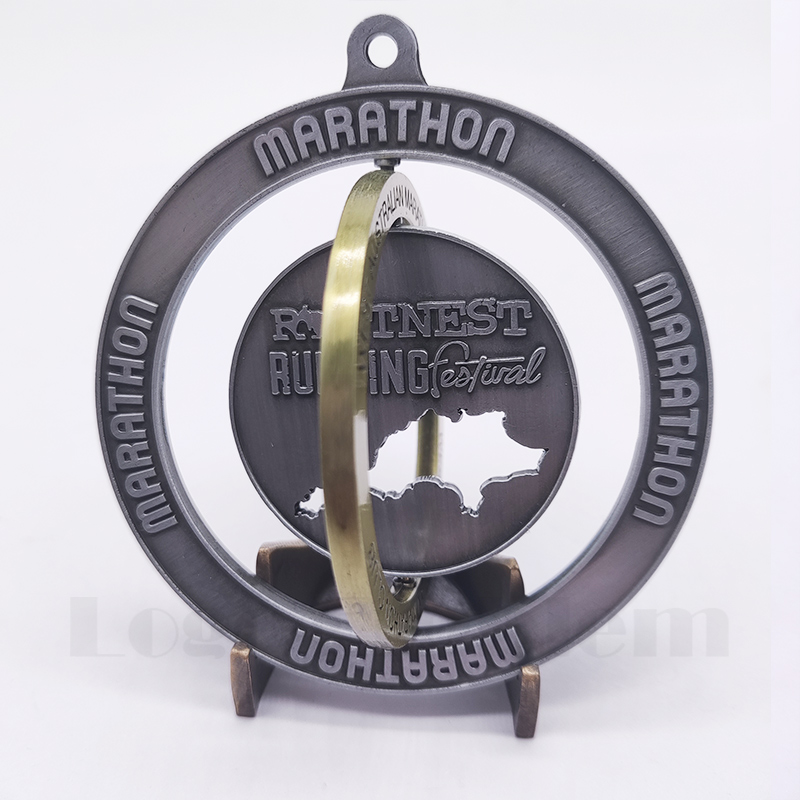
It remains the best choice for high-tier sports medals (e.g., track and field championships) or graduation awards. It allows for complex 3D mascots, unique cut-outs, and custom exterior shapes. You do not have to stick to traditional circles.
Implementation Risk: This premium quality requires time. You need a minimum of 4-6 weeks for mold creation and final production. Do not choose zinc alloy if your event happens next month.
Stamped Iron / Soft Enamel (The Mid-Tier Workhorse)
Stamped iron involves pressing a design into a solid sheet of metal using extreme force. It is highly cost-effective for large-volume school events. Iron provides a solid, heavy weight that feels expensive.
Soft enamel allows you to fill the recessed areas with vibrant school colors. The metal ridges separate these colors securely.
Design Constraint: The stamping process has physical limits. It requires at least a 2mm enclosed space to hold colored enamel cleanly. Tiny text or microscopic mascot details will not hold paint successfully.
Mylar Insert / Epoxy Dome (The Budget & Rush Solution)
Sometimes you face a sudden deadline. Mylar insert medals offer a rapid alternative. The design is printed in full color on a specialized sticker. This sticker is then applied to a pre-manufactured blank metal base and sealed under a protective epoxy dome.
Best Use Case: Choose this when the event is less than two weeks away. It also works perfectly when the budget only allows for standard off-the-shelf pricing, but you still want a localized touch. The epoxy dome gives the flat sticker a professional, glossy finish.
Alternative Materials
Schools increasingly seek sustainable options. Wood or acrylic options serve as lightweight, budget-friendly, and eco-conscious alternatives. They work particularly well for STEM fairs, environmental club awards, or low-impact elementary events. Acrylic supports bright UV printing, while wood offers a rustic, engraved aesthetic.
Manufacturing Style | Best For | Lead Time | Price Tier |
Die-Cast Zinc Alloy | Varsity sports, graduations, 3D designs | 4-6 Weeks | High |
Stamped Iron (Enamel) | Large volume events, colorful school logos | 3-4 Weeks | Medium |
Mylar Insert | Rush orders, tight budgets, photo designs | 1-2 Weeks | Low |
Wood / Acrylic | Eco-friendly themes, STEM events | 2-3 Weeks | Low/Medium |
Selecting Award Ribbons: Transforming Lanyards into Branding Assets
Organizers often treat the neck ribbon as an afterthought. However, the ribbon represents the largest visual component of the award when worn. It offers massive real estate for event marketing and school pride.
Stock Ribbons
These are pre-made lanyards featuring solid colors (red, blue, white) or standard stripes.
Pros: They come at a free or negligible cost. They ship instantly.
Cons: They offer zero customization. They do nothing to build localized school pride or commemorate a specific year.
Screen-Printed Ribbons
This method applies ink directly onto the fabric surface. It allows for basic text elements like "State Championships 2024" or a simple, single-color logo.
Limitations: Screen printing struggles with complex gradients. It cannot reproduce highly detailed school crests cleanly. Over time, the ink may crack if folded repeatedly.
Sublimated (Full-Color) Ribbons
Sublimation uses heat to infuse dye directly into the fabric fibers. This is the highest ROI upgrade for award ribbons. It allows edge-to-edge printing of complex school mascots, vivid event dates, and dynamic backgrounds.
More importantly, sublimation lets you print local sponsor logos directly on the ribbon. A local business might cover the entire cost of the medals in exchange for their logo appearing on every student's neck ribbon.
Sizing Adjustments
Ribbon length matters just as much as medal size. Standard ribbons are typically 30” to 32” long. This length places the medal squarely on an adult's chest.
For elementary school events, specify a shorter length. Request a narrower width (e.g., 7/8" instead of the standard 1.5"). This simple adjustment ensures the medal sits correctly on the student's chest rather than dangling awkwardly near their waist.
Common Mistake to Avoid
Never order standard adult-length ribbons for kindergarten or early elementary events. Long ribbons create tripping hazards and look visually disproportionate in photos.
Design Artwork Parameters: What Translates Well to Metal
Designing for metal requires a different mindset than designing for a website or a printed flyer. Metal reflects light, features physical depth, and requires specific spatial tolerances.
Simplifying the Mascot
A highly detailed web logo rarely translates perfectly to stamped metal. Intricate tiger stripes or tiny feather details will merge into a solid blob of metal during the stamping or casting process.
You must simplify the lines. Increase the negative space around the central mascot. Bold, striking outlines always look more professional on metal than intricate, thin strokes.
Text Legibility
Typography on metal can make or break the design. Always use all-caps for dates and event names. Lowercase letters often have tiny loops that fill with metal or paint, rendering them unreadable.
Maintain a kerning (letter spacing) value of 80-100. Tightly packed letters prevent antique or polishing finishes from reaching between characters. When the finishing compound cannot wipe away cleanly, it leaves a dark, muddy look between the letters.
Dual-Sided Utility
Many organizers leave the back of the award blank to save money. This wastes valuable real estate. You should utilize the back of the medal effectively.
While the front features the school crest, the flat back can feature engraved student names, specific academic categories, or sponsor recognition. If you add a flat recess on the back, you can even apply customized adhesive plates later. This allows you to bulk-order generic fronts while personalizing the backs locally.
Procurement Strategy: Timelines, Buffers, and Vendor Shortlisting
The best design in the world means nothing if the awards arrive two days after the ceremony. Procurement requires strict timeline management and strategic vendor selection.
The 5-10% Overage Rule
Never order the exact number of awards you currently need. You must always order 5% to 10% more medals than current registration numbers indicate.
Late registrants will appear. Items will get lost in transit. A student might drop and chip an award. Repurchasing 10 custom medals later will incur full mold and setup fees all over again. These secondary fees vastly exceed the minimal cost of ordering a few extras upfront.
Mapping the Timeline
Working backward from your event date is crucial for custom school medals. Every stage requires a buffer.
Artwork Approval: 1-3 days. Revisions take time. Do not skip the proofing stage.
Mold Setup & Production: 15-20 days. Physical metal requires curing, plating, and hand-enameling.
Shipping: 3-10 days (Air) or 30+ days (Sea/Boat).
Recommendation: Initiate the evaluation process 6-8 weeks prior to the event. This avoids panic and eliminates the need for expedited air freight charges, which can ruin your budget.
Vendor Evaluation Criteria
Do not simply choose the first vendor you find. You must evaluate them on specific operational criteria.
Shortlist suppliers who provide a physical prototype or a high-fidelity digital 3D proof. They must offer transparent pricing that separates the one-time mold fees from the individual unit costs. Finally, ensure they guarantee a firm delivery date in writing, rather than offering vague "estimated" windows.
Conclusion
Ordering custom awards requires balancing the emotional impact of the item with strict logistical realities. Standardized trophies fail to inspire, but poorly planned custom orders can cause severe administrative stress.
By controlling the physical size, matching the manufacturing process to your actual timeline, and utilizing sublimated ribbons for sponsor branding, schools can maximize their recognition budget. You do not need an endless budget to create something memorable; you just need intentional design choices.
Next Steps:
Gather your high-resolution school logo files and simplify them for metal production.
Finalize your estimated headcount, and immediately add your 10% safety buffer.
Request an itemized quote from your shortlisted vendors to see how zinc versus iron impacts your specific budget.
Verify the exact age group of the recipients to specify the correct ribbon length.
FAQ
Q: What is the minimum order quantity (MOQ) for custom school medals?
A: Most manufacturers set MOQs at 50 to 100 units to offset the fixed cost of creating the custom metal mold. For smaller quantities, mylar insert medals are the most cost-effective route, as they utilize pre-made metal bases and only require custom stickers.
Q: How far in advance should a school order custom medals?
A: Finalize artwork and payment 4 to 6 weeks before the event. If utilizing sea freight to lower bulk costs (e.g., for a district-wide order of 1,000+ units), allow 8 to 10 weeks. Always leave a buffer for unexpected shipping delays.
Q: Are the materials used in custom medals safe for young children?
A: Yes, reputable suppliers use non-toxic, lead-free zinc alloy or iron. If safety or weight is a primary concern for very young students, request acrylic, wood, or silicone alternatives. Always specify smooth, chamfered edges to prevent sharp corners from causing scratches.


